Warblington Castle and Church, Havant: Remains and Walk
Warblington Castle is private property with no public access, but the Saxon-tower church beside it and the shoreline path to Langstone and Emsworth are there to explore.
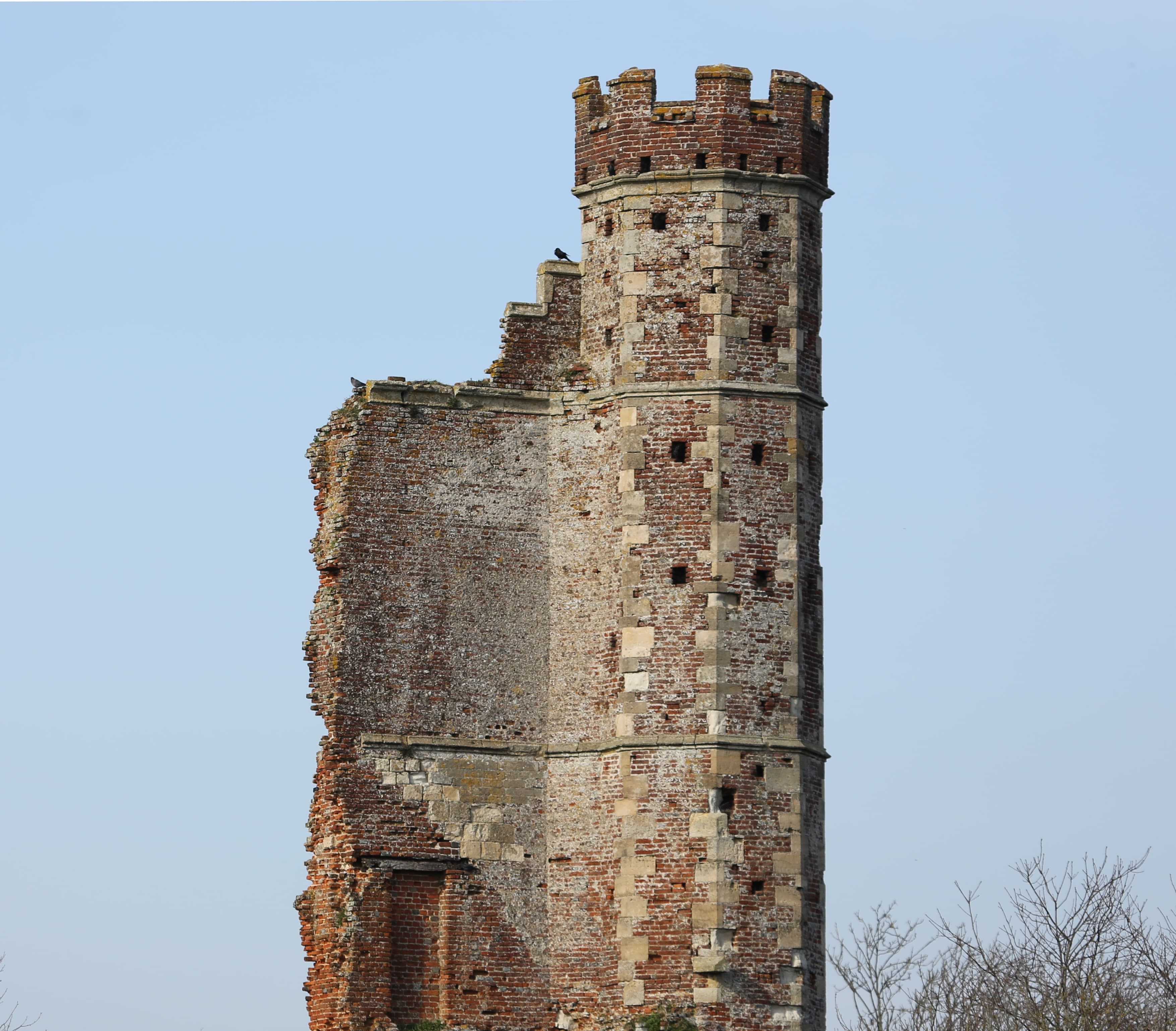
Warblington Castle's remains, a gate tower and part of a wall, are on private property with no public access according to Wikipedia; the neighbouring Grade I listed St Thomas à Becket Church and the Conservancy's shoreline walk to Langstone are the places to visit.
Can you visit Warblington Castle?
Not as a visitor. Wikipedia's article on Warblington Castle says the remains are on private property that does not allow public access. It describes the site as a moated manor near Langstone in Havant parish, now in the village of Warblington, and says the land remains private. Please do not climb walls or enter the grounds. The sections below cover what you can see and walk to around it, and what the sources say about its history.
What remains of Warblington Castle?
According to Wikipedia, most of the castle was destroyed during the English Civil War, leaving only a single gate tower, part of a wall and a gateway. It says the remains are a Grade II* listed building and a scheduled monument, and that today the turret, the arch of the gate and the drawbridge support in the moat survive. For the formal listing description, search the Historic England list.
What is the history of the castle?
Wikipedia says the moated manor was built between 1515 and 1525 for Margaret Pole, Countess of Salisbury, after Henry VIII gave her the manor in 1513. It records that Mary of Guise, widow of James V of Scotland, stayed a night there on 28 October 1551 as a guest of Sir Richard Cotton, who held it after Margaret Pole was attainted for treason. The article says the Cotton family were Royalists, that Parliamentarian forces largely demolished the manor, and that one turret of the gatehouse was left as an aid to navigation for ships in Langstone channel.
The article also says the manor is mentioned in the Domesday Book of 1086 and that Warblington was a Saxon settlement from the 7th century. A separate Wikipedia page on Warblington describes a Roman villa to the south of the coast road, in the fields of what is now Warblington Castle Farm.
What is St Thomas à Becket Church?
The church sits at the heart of the Warblington Conservation Area. Wikipedia's Warblington article says the area centres on the Grade I listed St Thomas à Becket Church and includes a cemetery, the castle ruins, the Old Farmhouse and the Old Rectory, and that the church occupies the site of an Anglo-Saxon church. It says the oldest part is the small central tower, which is Saxon and was built in the 11th century, and that the architectural writers Pevsner and Lloyd described the church in 1967 as essentially late 12th century with an "undisturbed" setting. It adds that the parish church is part of a joint parish with St James's Church in Emsworth.
Havant Borough Council lists the Warblington conservation area, dated 1993, among the borough's 14 on its conservation page, alongside a character appraisal you can download. Service times and opening arrangements change, so check with the parish before you go.
How do I walk the shoreline to Emsworth and Langstone?
The Chichester Harbour Conservancy publishes a route leaflet called Emsworth, Langstone and the old oyster beds. It describes a 10km (6 mile) shoreline walk that takes about 3 hours, rated moderate and fairly flat, starting on the shoreline at the end of Warblington Road, PO10 7HW, where it lists free roadside parking. It says the Stagecoach 700 bus stops at Beach Road or Warblington Road, about 0.5km from the start.
The leaflet takes you past the church and through the cemetery, diagonally across a field to the shore, then along the shore to the old mill and pond, past The Royal Oak and on to The Ship Inn at Langstone, both mentioned only as landmarks. At Langstone it crosses the bridge and joins the Hayling Billy cycle path, then continues to Stoke Common car park and the RSPB old oyster beds. The leaflet describes them as important for nesting and roosting shoreline birds. For the return it suggests the inland route or the shore route, which is shingle and not a designated public footpath.
Read the leaflet's warning before you set off. The Conservancy says the route floods at high tide in a couple of places and that you should check tide times before setting out. Its weather and tides page links to 7 day tide times. The leaflet also asks walkers to keep to the public footpath network and dog walkers to keep dogs under control and give wildlife some space. Our Langstone guide covers the second half of the walk.
How do I get to Warblington by train?
National Rail lists Warblington station on Southleigh Road, postcode PO9 2QD, managed by Southern, and shows ticket machines as available. As published in October 2026, the ticket office is listed as open Monday to Friday 07:45 to 09:15 and unavailable at weekends. Check the page for live departures. See our Havant train station guide for the main interchange. More on the area is on our Warblington and Denvilles page.
Share this article